What Nobody Tells You About NYT Connections Hints August 4 Puzzle
Every morning around the same time, a small but stubborn crowd opens the same colorful grid and stares at sixteen words trying to figure out which four belong together. If you’re searching for nyt connections hints august 4, you’re probably somewhere in that grid right now, stuck between two categories that seem to overlap. That overlap is the entire design of the game, and it’s worth understanding before you burn through your guesses.
I’ve played this puzzle daily for over a year, and the pattern that trips people up most isn’t vocabulary, it’s overconfidence. You see four words that look obviously connected, lock them in, and watch the tiles scatter because the real connection was something sneakier. This article walks through how the hint system works, what the color difficulty levels actually mean, and how to think your way through a tough grid without needing the answer handed to you outright.
NYT Connections Hints August 4
The puzzle refreshes at midnight Eastern time, which means the August 4 grid follows the same format every regular player already knows: sixteen words, four hidden groups, and one wrong guess away from frustration. The trick with any daily grid, including this one, is resisting the urge to group by surface meaning first.
Puzzle setters love hiding a purple or yellow category inside what looks like an obvious green one. A handful of words that seem to describe the same object usually get split apart, with one or two of them secretly belonging to a wordplay category instead. That’s the pattern worth watching for regardless of which day’s puzzle you’re solving.
How The Color System Works
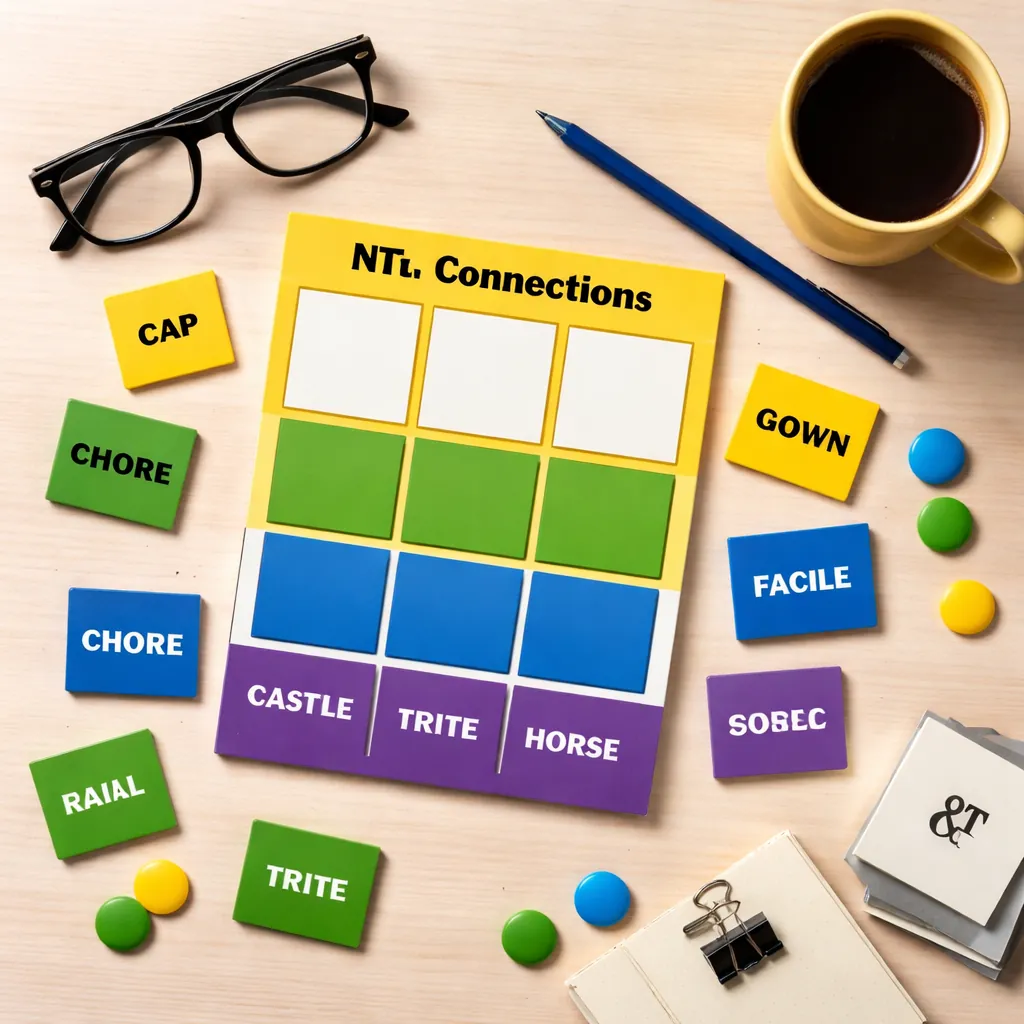
Four difficulty tiers exist in every grid: yellow for the most straightforward group, green a step harder, blue harder still, and purple reserved for the trickiest wordplay or pun-based connection. Knowing this ranking changes how you approach your first few guesses.
Most players do better starting with categories they’re most confident about, usually yellow or green, rather than chasing the purple group first out of curiosity. Locking in the easier groups early narrows the remaining pool and makes the harder connections easier to spot by process of elimination.
Reading The Puzzle Categories
Category names themselves are often a clue and a trap at the same time. A title like “Things You Wear” sounds direct, but the actual four words might include one that fits a completely different theme once you notice the wordplay angle hiding underneath.
Read the category title twice before locking anything in. The first read usually gives you the obvious meaning, and the second read is where you start noticing double meanings, homophones, or category titles that only make sense once you see all four correct words together.
Common Mistakes Players Make
The biggest mistake is submitting a guess the moment four words feel connected without checking whether any of them fit a different group better. A word like “spring” could belong to a season group, a coil group, or a verb group, and puzzles exploit exactly that kind of ambiguity constantly.
Another common slip is ignoring words that don’t obviously fit anywhere. Those leftover words are often the ones locked into the trickiest purple category, and skipping past them early usually means circling back to them later anyway, just with fewer guesses left to work with.
Building A Solving Strategy
Start by scanning the whole grid before touching a single word. List out any word that could plausibly belong to more than one category in your head, because those overlaps are almost always intentional design choices rather than accidents.
Group by process of elimination once you’ve built confidence in one category. If you’re sure about a yellow group, you’ll often uncover pieces of the remaining puzzle just from what’s left over, since a grid with 16 words gives away information every time four of them get removed. If you want a broader look at how puzzle-heavy games get analyzed, our own site’s recent RPG review coverage shows how the same logic-first approach applies across different game genres.
Why Purple Categories Trick People
Purple groups exist specifically to punish assumptions. They’re usually built around wordplay, like words that share a hidden homophone, or a theme that only clicks once you say the words out loud instead of just reading them silently on the screen.
I’ve lost a streak more than once because I refused to say a word out loud and missed an obvious pun sitting right there. It sounds almost silly, but reading the grid aloud, or at least sounding words out mentally, catches connections that a purely visual scan tends to miss completely.
Tracking Your Guess Attempts
You get four mistakes before the puzzle locks you out for the day, and each mistake actually gives you information if you pay attention. According to the New York Times Games section, the puzzle was designed around that limited guess count specifically to encourage careful observation over rapid guessing.
Treat a wrong guess as a clue rather than a failure. If three of your four picked words turn out correct with one wrong, that tells you exactly which word needs to move to a different group, cutting your remaining guesswork down significantly.
Using Hints Without Spoiling It
A good hint system gives you just enough nudge without handing over the full answer outright. The most useful version tells you a category’s general theme, like “these are all types of something,” without naming which four words actually belong to it.
If you want to keep some challenge intact, read only the vaguest hint level first. Save the more specific hints, the ones that name letters or spell out the exact theme, for moments when you’re genuinely stuck rather than reaching for them the second a puzzle gets slightly tricky.
When To Ask For Help
There’s no shame in checking hints partway through, especially on days when the wordplay category is doing something unusually clever. The whole point of a daily puzzle is enjoyment, not punishing yourself for missing a pun you’d never heard before.
That said, pacing matters. Give yourself at least two honest attempts at grouping before reaching for outside help. Most players find the puzzle clicks faster over time simply because pattern recognition improves with daily repetition, not because the puzzles themselves get easier.
Spotting Wordplay Connections Early
Wordplay categories often hide behind ordinary-sounding words that share a hidden prefix, suffix, or homophone. Words like “current,” “stream,” and “flow” might look like a water theme until you realize they’re secretly all types of something entirely unrelated to liquid.
Scan for words that feel slightly out of place compared to the rest of the grid. A single word that seems randomly dropped in usually belongs to the wordplay group, since puzzle setters like planting one obvious outlier to bait an early wrong guess.
Comparing Weekday And Weekend Puzzles
Weekday grids tend to lean more literal, while weekend puzzles, especially Saturday’s, often push the wordplay difficulty higher across all four categories instead of just the purple one. That shift catches a lot of casual players off guard if they’re used to an easier midweek rhythm.
Knowing which day of the week you’re solving changes how cautious you should be with early guesses. A Tuesday puzzle rewards quick pattern matching, while a Saturday grid rewards slowing down and re-reading every category title at least twice before committing.
Improving Your Streak Consistency
Consistency comes from habit more than raw skill. Players who solve daily, even on days they only get three out of four groups right, tend to build faster pattern recognition than people who only play occasionally when they remember to.
Keeping a mental note of past tricky categories helps too. If a puzzle once used “types of bread” as a wordplay group instead of a literal food category, that memory sticks and makes you more suspicious of similar-looking literal categories the next time one shows up.
What Makes A Grid Difficult
Difficulty isn’t just about obscure vocabulary, it’s about how convincingly a grid disguises its true groupings. A hard puzzle often has two categories that both seem to fit the same four words equally well, forcing you to guess based on which theme feels slightly more specific.
Sixteen words with heavy overlap potential make for the toughest grids. The puzzle setters clearly enjoy building these near-perfect decoys, and honestly, those are usually the most satisfying puzzles to finally crack once everything clicks into place.
Solving As A Daily Habit
Treating this as a quick daily ritual rather than a chore changes how much you actually enjoy it. A few minutes each morning with coffee, working through sixteen words, is a low-stakes way to keep your brain warmed up before the rest of the day gets busy.
Plenty of players solve alongside friends or family, comparing which category tripped them up first. That shared frustration over a sneaky purple group is honestly part of the appeal, turning a solo word puzzle into something closer to a daily conversation starter.
Avoiding Common Guess Traps
Traps usually hide in categories with near-synonyms. Words that mean almost the same thing get split across two different groups specifically to bait a wrong guess from anyone who groups purely by definition instead of by the puzzle’s actual intended theme.
Slow down whenever four words feel too easy to spot. Puzzles rarely make the correct answer that obvious this early in the grid, so an easy-looking group sitting right there often means a trap is hiding one layer beneath the surface.
Getting Better Over Time
Daily practice genuinely sharpens pattern recognition in a measurable way. Regular players report solving faster after just a few weeks, mostly because they start recognizing the setter’s favorite tricks instead of treating every puzzle as a fresh unknown challenge.
Keep track of the categories that consistently fool you, whether that’s homophones, hidden compound words, or synonym traps, and pay closer attention to those specific patterns the next time a grid looks deceptively simple on first glance.
Frequently Asked Questions
What time do nyt connections hints august 4 typically become available? New puzzles, including this one, publish at midnight Eastern time, and most hint resources update shortly after to match the day’s specific grid.
How many guesses do I get before the puzzle locks me out? You get four mistakes total before the game ends your attempt for the day, so it’s worth pacing your guesses carefully once you’re down to your last one or two.
Is the purple category always the hardest one to solve? Almost always, yes. Purple groups are built around wordplay or hidden meanings, while yellow tends to be the most literal and straightforward of the four categories.
Can I replay a missed puzzle the next day? No, each day’s grid is available only on its release date, though several archive sites let you revisit older puzzles if you want extra practice.
Wrapping Up The Puzzle Hints
None of this replaces just sitting down and working through the grid yourself, but knowing the color system, the common traps, and how wordplay categories tend to hide themselves makes every attempt a little less frustrating. The puzzle rewards patience more than raw vocabulary, and that’s honestly what keeps people coming back day after day.
If you were searching for nyt connections hints august 4 specifically, the same core strategy applies regardless of which day you’re solving: scan before guessing, save purple for last unless you’re confident, and treat wrong answers as information rather than failure. Puzzles like this are built to be a little sneaky, and figuring out the trick is most of the fun anyway.
Give yourself permission to miss a group here and there. Streaks matter less than the habit itself, and the players who stick with it longest are usually the ones who treat a tough grid as an interesting puzzle to pick apart rather than a test they need to pass perfectly every single morning.