Why Your iPhone And Android VPN Usage Warning Actually Matters More
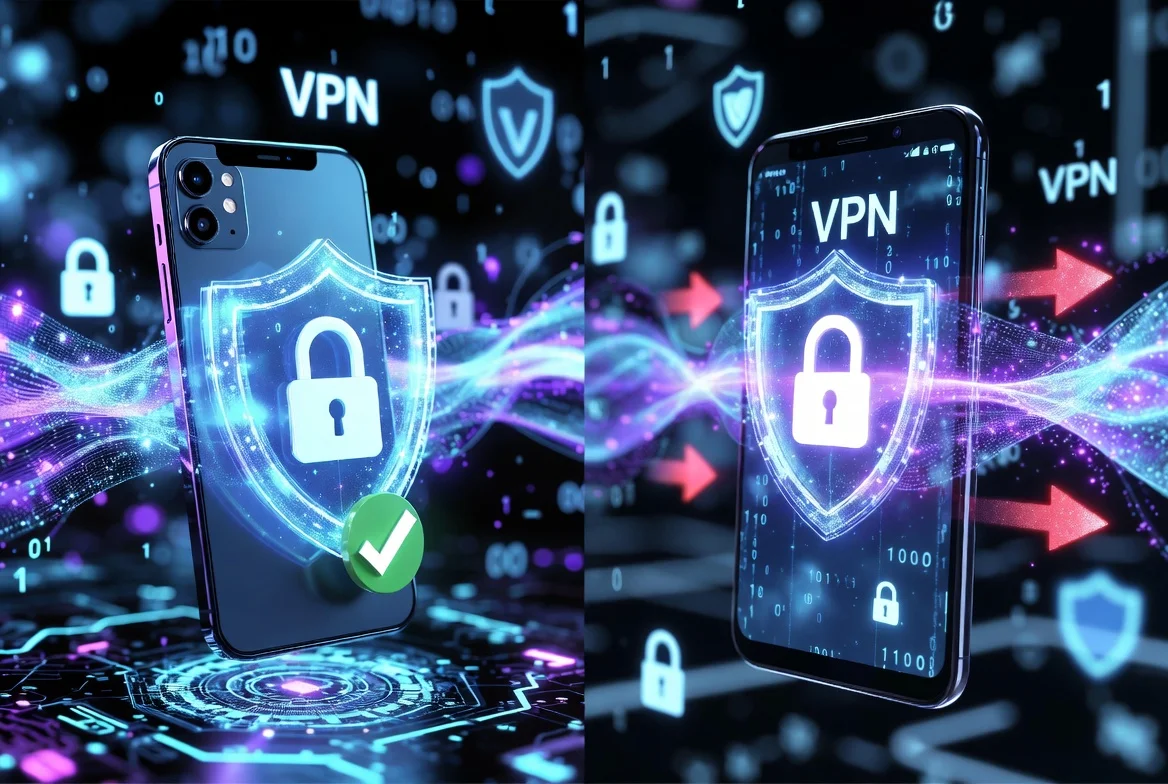
Most people scroll past a random pop-up without a second thought, until the one that shows up mid VPN session makes them pause. An iPhone Android VPN usage warning is exactly that kind of message. It shows up when your phone thinks something about your VPN connection needs your attention, whether that’s a battery drain issue, a permission request, or a signal that your traffic isn’t routing the way you expect. A lot of folks assume it’s just noise. It usually isn’t.
I’ve had this happen on both an iPhone and a cheap Android tablet within the same week, and the timing wasn’t random. Both devices flagged the VPN app for slightly different reasons, but the underlying message was the same: pay attention to what’s actually happening on your connection, not just whether the little VPN icon is lit up in your status bar. That distinction is the whole point of this article.
iPhone Android VPN Usage Warning
When this notification appears, it’s rarely a glitch. iOS and Android both run background checks on VPN apps, partly for battery reasons and partly for security ones. If a VPN profile asks for more system access than it needs, or if it keeps a tunnel open without any real traffic moving through it, the operating system will flag it.
On iPhone, this often shows up as a small note under Settings, sometimes tied to a specific VPN configuration profile. On Android, you might see it as a persistent notification you can’t fully swipe away while the VPN is active. Neither platform is trying to scare you off VPNs entirely. They’re just insisting you know what’s running and why.
Why This Warning Matters
Ignoring a VPN warning is a bit like ignoring the check engine light because the car still drives fine. Sure, nothing breaks today. But the warning exists because something under the hood isn’t behaving the way it should, and that gap tends to widen quietly.
A stale or misconfigured VPN profile can leak your real IP address during brief reconnections, especially on mobile networks that switch between WiFi and cellular data. That’s the kind of thing a VPN usage warning is designed to catch before it becomes a privacy problem instead of a technical footnote.
How VPNs Actually Work
Strip away the marketing language, and a VPN is really just a tunnel. Your device connects to a server the same basic way it connects when you’re comparing phones, like readers do on this iPhone comparison guide, and in a similar way, your traffic connects to a VPN server before it heads out to the wider internet. That server becomes the middleman that websites see instead of your actual device.
Encryption is the part that gets the most attention, but the tunneling protocol matters just as much. WireGuard, OpenVPN, and IKEv2 all handle that tunnel differently, and the protocol your app defaults to affects both speed and how reliably the connection survives network switches on a phone.
The catch is that none of this happens instantly or perfectly. There’s a brief window every time your phone changes networks where the tunnel has to rebuild itself, and that gap is exactly where warnings tend to surface.
Common iPhone VPN Mistakes
The single biggest mistake is installing a VPN profile once and never touching the settings again. iOS treats VPN configurations as semi-permanent once installed, so an outdated profile can sit there for months, quietly running with settings that no longer match what the app actually needs.
Another mistake is granting a VPN app “Always On” permission without checking what that actually does. It sounds convenient, but it also means the app has far more control over your network traffic than most casual users realize, and it’s part of why an iPhone Android VPN usage warning tends to show up more on always-on configurations.
Reading The VPN Warning
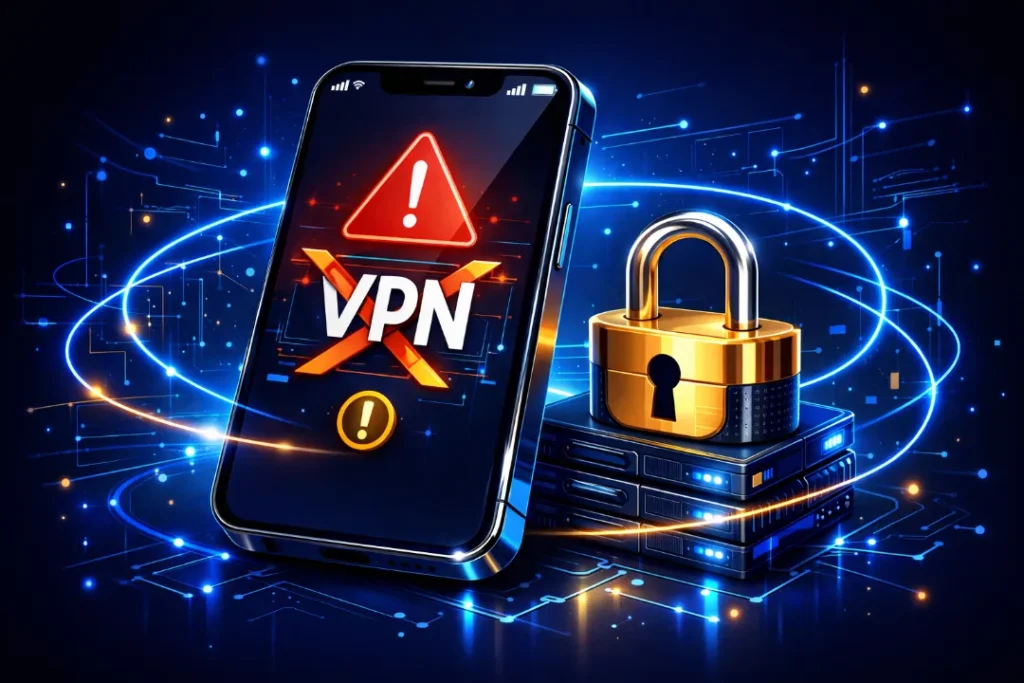
Not every warning means the same thing, which is honestly where most confusion starts. Sometimes it’s purely informational, telling you the VPN reconnected after a network switch. Other times it’s a genuine flag that the tunnel dropped and your traffic briefly went out unprotected.
The wording usually gives it away if you read past the first line. Anything mentioning “protection paused” or “connection unsecured” deserves immediate attention. Anything mentioning battery optimization or background activity is more of a heads-up than an emergency, though it’s still worth checking occasionally.
Public WiFi And VPN Risks
Coffee shop WiFi is where most people actually rely on a VPN, and it’s also where warnings pop up most often. Public networks reconnect unpredictably, router firmware is rarely current, and your phone is constantly negotiating handoffs between access points as you move around.
Every one of those handoffs is a small opportunity for the VPN tunnel to briefly drop. On a stable home network you might never see a warning in months. On public WiFi, especially in busy places, it can happen several times in a single sitting, which is exactly why security guides keep repeating the same advice about caution on open networks.
Free VPN Apps Danger
Free VPN apps aren’t automatically bad, but the incentive structure behind them deserves a skeptical eye. Running servers costs real money, and if you’re not paying for the service, something else is usually covering that cost, whether that’s ads, data collection, or bandwidth reselling.
A lot of the sketchier free apps skip proper encryption implementation entirely, relying instead on a basic proxy that just changes your visible IP address without actually protecting your traffic. That gap is a common trigger for a VPN usage warning, because the OS notices an app claiming VPN status without behaving like an actual VPN.
VPN Permissions On Android
Android is more explicit about VPN permissions than iOS, which is honestly a good thing. When you enable a VPN app, Android shows a direct system dialog confirming that the app can see and redirect all your network traffic. That dialog isn’t decoration, it’s the actual permission grant.
The trouble starts when people tap through it without reading, then forget which apps have that level of access months later. Android’s periodic reminder about active VPN connections exists specifically to jog that memory, and it’s worth actually reading instead of dismissing on autopilot.
iPhone VPN Settings Explained
Inside iPhone Settings, under General and then VPN and Device Management, you’ll find every configuration profile installed on the device, including ones tied to work accounts or old apps you might have forgotten about. It’s worth a look every few months, honestly.
Each profile lists what it can access and which server it connects to. If you see one you don’t recognize, or one tied to an app you deleted ages ago, removing it closes a door that could otherwise sit open indefinitely without anyone noticing.
When VPN Warnings Appear
Warnings cluster around a few predictable moments. Switching between WiFi and cellular data is the biggest trigger, since the VPN tunnel has to rebuild from scratch each time. Waking a phone from deep sleep is another, because background apps get throttled and the VPN connection can lapse without you noticing right away.
App updates are a quieter trigger. When a VPN app updates itself, it sometimes resets permissions or configuration defaults, and the operating system flags that reset as something you should confirm rather than assume carried over correctly.
Warning Signs You Ignore
Some signs get waved off constantly, and they shouldn’t be. A VPN icon that flickers on and off repeatedly usually means the tunnel is unstable, not just cosmetically glitchy. Websites suddenly loading with your actual location showing instead of the VPN server’s location is a bigger red flag still.
Battery drain that spikes specifically when the VPN is active, far beyond what it used to be, often points to a background process stuck in a reconnect loop. That loop is precisely the kind of thing an iPhone Android VPN usage warning is trying to surface before it becomes invisible background behavior nobody notices.
Choosing A Trustworthy VPN
Reputation research beats flashy marketing every time with VPN providers. Independent audits, published transparency reports, and a clear jurisdiction for the company all matter more than a slick landing page promising unlimited everything for a few dollars a month.
I’ll admit a personal bias here: I trust providers that publish third-party audit results over ones that just claim “military grade encryption” in bold letters and leave it at that. Anyone can write a marketing sentence. Not every provider lets outside researchers actually check their claims.
VPN Logging Policies Matter
A no-logs policy sounds reassuring until you actually read what it covers. Some providers log connection timestamps and bandwidth usage while claiming not to log browsing activity, which is technically true but leaves a meaningful trail behind regardless.
According to privacy research from EFF, the gap between marketing language and actual data practices is one of the most common sources of confusion for VPN users trying to evaluate providers. Reading the actual privacy policy, not just the summary page, is tedious but genuinely worth the ten minutes it takes.
Android VPN Kill Switch
A kill switch blocks all internet traffic the instant your VPN connection drops, rather than letting your phone quietly fall back to your regular unprotected connection. Without one, a dropped tunnel can leak traffic for several seconds before you even notice the VPN icon has disappeared.
Not every Android VPN app includes this feature, and fewer still enable it by default. It’s usually buried a layer deep in the app’s settings menu, worth digging for the first time you install any new VPN app on an Android device.
iPhone VPN Battery Impact
VPNs do use more battery than a direct connection, there’s no getting around that physics. Constant encryption and decryption of every packet takes processing power, and maintaining a tunnel through network switches adds background activity that a non-VPN connection simply doesn’t need.
That said, a well-built VPN app shouldn’t drain your battery dramatically faster during normal browsing. If you notice a sharp jump after installing a new VPN, especially alongside repeated warning notifications, that combination usually points to a poorly optimized app rather than an inherent VPN limitation.
Enterprise VPN Usage Rules
Work-issued VPN profiles play by different rules entirely. Companies often push configuration profiles that route specific traffic through corporate servers while leaving personal browsing untouched, or sometimes the opposite, depending on how strict their IT policy is.
If your work phone or a personal device with a work profile keeps showing an iPhone Android VPN usage warning, it’s worth asking IT directly rather than guessing. Corporate VPN setups sometimes conflict with personal VPN apps running at the same time, and that conflict is exactly the kind of thing that triggers repeated warnings.
Fixing Repeated VPN Warnings
If warnings show up constantly rather than occasionally, start by removing and reinstalling the VPN app rather than just restarting your phone. A clean reinstall clears cached configuration data that sometimes causes the reconnect loops mentioned earlier in this article.
Updating both the VPN app and your phone’s operating system closes another common gap, since mismatched versions between an app and the OS are a frequent cause of persistent, low-level warning notifications that otherwise seem to appear for no clear reason at all.
Staying Ahead Of Warnings
Checking your VPN app’s settings every couple of months takes a few minutes and catches a surprising number of small issues before they turn into bigger ones. Look specifically for permission changes, expired configuration profiles, and any server region settings you don’t remember choosing yourself.
Treat any iPhone Android VPN usage warning as useful information rather than an annoyance to dismiss. The phone isn’t trying to slow you down. It’s flagging something worth thirty seconds of your attention, and that small habit adds up to noticeably better protection over time.
Frequently Asked Questions
What does an iPhone Android VPN usage warning actually mean? It usually means your operating system noticed something about how the VPN app is behaving, whether that’s a permission change, a dropped connection, or unusual background activity, and it wants you to confirm everything is intentional.
Should I turn off my VPN when I see a warning? Not automatically. Read what the warning says first. If it mentions an unsecured or paused connection, disconnecting and reconnecting is usually the safer move than continuing to browse.
Do free VPN apps trigger more warnings than paid ones? Generally yes, mostly because free apps tend to cut corners on proper tunnel implementation, which is one of the more common triggers for these notifications in the first place.
Can a VPN warning mean my data already leaked? Sometimes, though not always. A warning about an unsecured connection during a brief reconnect window is worth treating seriously, especially if it happened on public WiFi.
Wrapping Up The Warning
None of this means VPNs are unreliable or not worth using. They’re still one of the more effective everyday tools for keeping your browsing private on networks you don’t control. The point of paying attention to warnings isn’t paranoia, it’s just basic upkeep, the same way you’d glance at a car’s dashboard once in a while.
An iPhone Android VPN usage warning is your phone’s way of saying it noticed something and wants a second look. Sometimes that’s nothing more than a routine reconnect after switching from WiFi to cellular. Other times it’s a genuine signal that your traffic briefly went out unprotected, and that distinction is worth thirty seconds of reading before you swipe it away.
Get into the habit of checking your VPN settings every so often, keeping the app updated, and actually reading what a warning says instead of dismissing it on reflex. Small habits like these are what separate people who think they’re protected from people who actually are, and the gap between those two groups is usually just a matter of attention, not technical skill.